Apr 3, 2012

Rataraju Speaking in Nepali 5

KP: Tapaiko desko, Nepalko faja ko ahile?
(Who is the king of Nepal, your country's?)

CL: Ah ... oh ...
(Ah ... oh ...)

KP: Nepalko raja?
(The king of Nepal?)

CL: Shah ...
(Shah...) *Shah Dynasty

KP: Shah?
(Shah?)

CL: Shah.
(Shah.)

KP: Shah, namchahi ke hola?
(Shah, what is the name?)

CL: Ah ...
(Ah...)

KP: Nam chahi ke hola?
(What is the name?)

CL: Ha, ho.
(Yes, yes.)

KP: Nam? Rajako nam?
(Name? Name of the king?)

CL: Ho, ha ... bujina ... ha.
(Yes, yes... I don't know... ha.)

KP: Tapaile agi rana sanga ladhai garya bhannu hunthiyoni ke bhannu bho? Gorkha?
(You said before that you fought against Rana or something like that. What did you mean? Was it Gurka?)

CL: Ha ...
(Ha ...)

KP: Tapaiko buwale ke garnu hunchare?
(What does your father do?)

CL: A ... mero buwa ...
(A... my father...)

KP: Hajur.
(Yes.)

CL: Ah ...
(Ah...)

KP: Ke garnuhuncha buwa?
(What does your father do?)

CL: Mero buwa.
(My father.)

KP: Hajur.
(Yes.)

CL: Ah ...
(Ah...)

KP: Buwa?
(Father?)

CL: Gorkha.
(Gorkha.)

KP: Gorkha?
(Gorkha?)

CL: Ah.
(Ah.)

KP: Gorkhama busnu huncha?
(Does he live in Gorkha District?)

CL: Mero buwa Go ... Gorkha ...mero buwa Tamang hunnuhuncha.
(My father Go... Gorkha... my father is from the Tamang tribe.)

KP: Hajur.
(I see.)

KP:  Tapaile Dahainma ke kani garnuhuncha? Dashainma?
(What do you eat at Dashain?) *Dashain is the biggest festival in Nepal.

CL: Ka ... kana.
(Fo... food.)

KP: Hajur. Dashain ke.
(Yes. What do you eat at Dashain?)

CL: Dal, dal, Kodo.
(Dal, dal and kodo.) *Dal is a kind of bean soup. Kodo is a millet.

KP: Kodo?
(Kodo?)

CL: Kodo.
(Kodo.)

KP: He.
(?)

CL: Dal.
(Dal.)

KP:  Dal.
(Dal.)

KP: Ani Dashain, chadbadma chahi ke kanu huncha ta?
(What do you eat at Dashain?)

CL: Ah ... oh ... a ... Ho ...
(Ah ... oh ... a ... Yes...)

KP: Chadbadma ke kanuhuncha?
(What do you eat at the festival?)

CL: Kana.
(Food.)

KP: Dashaima? Dashain manaunuhuncha?
(Do you celebrate Dashain?)

CL: Ah ... kodo ... bhat ... dal. ani.
(Ah... kodo... food... kodo. Eat.)

KP: Tapaiko gauma kati jana hunuhuncha?
(How many people are there in your village?)

CL: Ah ...
(Ah...)

KP: Tapeiko gauma.
(In your village.)

CL: Pachis.
(25.

KP: Pachis jana?
(Is it 25?)

KP: Hari lai chinuhuncha, Hari lai?
(Do you know Hari?) *Hari is a Hindu god.

CL: A, ah ... eh ...
(A, ah ... eh ...)

KP: Hari lai chinuhuncha? Hari.
(Do you know Hari? Hari.)

CL: Murari.
(Murari.)

KP: Murari?
(Murari?) *Could it be the Sanscrit poet Murari? 

CL: Kwa ... eh ... Mero ...
(My... )

KP: Tapaiko chimekiko nam ke ho? chimeki ko?
(What is the name of your neighbor?)

CL: Oh ...
(Oh ...)

KP: Chimeki ma ko hunuhuncha?
(Who are the people in your neighborhood?)

CL: Oh ... ho ...
(Oh ... yes ...)

KP: Chimekima?
(In your neighborhood?)

CL: Ei ... La ... Laji ho ... Mero sathi.
(...My friend).

KP: Sathi? Sathi?
(Friend? Friend?)

CL: Ho ...
(Yes...)

KP: Sathi ko nam ke ho ta?
(Then, what is the name of your friend?)

CL: Ho, ho ... Sathi cha. Oh ... ho ...
(Yes, yes... There is a friend. Oh... yes...)

KP:  ... nam ke ho? Sathi ko nam ke ho ta?
(...Name? What is the name of the friend?)

CL: Bujina.
(I don't know.)

KP:  Sathiko nam. Tapaiko sathiko nam?
(Friend's name. What is the name of your friend?)

CL: Bu ... bu ...
(Don't... don't...)

KP: Bujnubhyena?
(You don't know?)

KP: Tapai ke garnu hunccha re ahile? Khetbari cha?
(How do you make a living? Do you have a field?)

CL: A ... ke ?
(A... what?)

KP: Khetbari.
(Field.)

CL: Ah ... Bujina.
(Ah... I don't know.)

KP: Kethbari chaina?
(Isn't there any field?)

CL: Ah ...
(Ah...)

KP: Ghar ke ko ghar ho?
(What is your house made of?)

CL: Ah ...
(Ah...)

KP: Bujnubhyena.
(Don't you know?)

CL: Un.
(No.)


<To be continued>

Mar 22, 2012

Rataraju speaking in Nepali 4

KP: Tapailai kehi bhanna man cha kita? Tapailai kehi bhanna man cha?
      (Would you like to say something? Would you like to say something?) 

CL: Ah ... ah ... mo ... ah ... mero ... 
      (Ah ... ah ... mo ... ah ... my...) 
  
KP: Hadjur.
      (Yes.)

CL: Mero ... ha ... ha ... Mero pet.
      (My... ha... ha... My stomach.)

KP: Hajur.
      (Yes.)

CL: Ah ... oh ... dukahuncha. 
      (Ah... oh... it hurts.)

KP: Tapaiko pet dukyo?
      (Do you have a stomachache?)

CL: Ah!
     (Ah!)

KP: Tapaiko mritu ke bhayera bhako?
     (What is the cause of your death?)

CL: Oh ... oh ... Ma ... rog ...
     (Oh... oh... I... sick...)  

KP: Tapaiko mritu ke bhayera bhako?
      (What is the cause of your death?)

CL: Rog ... Rog.
      (Sick... sick.)

KP: Rog?
      (Sick?)

CL: Ah.
      (Yes.)

KP: Ke ko rog lagyo?
     (What kind of sickness?)

CL: Au ... ha .... pet.
    (Au... ha... stomach.)

KP: Pet?
    (Stomach?) 

CL: Pet dukahuncha.
    (I have a stomachache.)

KP: Pet dukera?
    (Do you have a stomachache?)

CL: Ah ... ho ... ah... guhar ... ha ...
    (Ah... ho... ah... help... ha...)

KP: Pet dukera?
    (Do you have a stomachache?)

CL: Ahu ... ho ... ah ... guhar ruha ... ha ...
    (Ah... yes... ah... help, ha... ha...)

KP: Ke bhayo dukhyo?
    (Does it hurt?)

CL: Guhar ... guhar.
    (Help... help...)

KP: Kati barsama bitnu bhako?
    (How old were you when you died?)

CL: Ah ... ah ...
    (Ah ... ah ...)

KP: Kati barsama ...
    (How old were you?)

CL: Umer ... Mero ... umer ...
    (Age... my age...)

KP: Hajur. Bite ko umer.
    (Yes. Your age when you died.)

CL: Ath satori ... ah ...
    (8 and 70... ah...)

KP: Hajur?
    (Yes?)

CL: Ath satori.
   (8 and 70.)

KP: Sattari?
   (70?)

CL: Ath satori.
   (8 and 70.)


<To be continued>

Mar 15, 2012

Rataraju Speaking in Nepali 3


KP: Adjur? Hajur, feri ek choti bhandinusha? Feri ek choti. 
     (Can you say it again? Once again.)

CL: Ah ... Ki ... ah ... muh ... 
     (Ah ... Ki ... ah ... muh ...)

KP: Feri ek choti bandinuhuncha agiko?
     (Can you say it again?)

CL: Ah ... e ... de ... Bujina. 
     (Ah ... e ... de ... I don't know.)

KP: Bujnubhaena?
     (Don't you know?)

CL: A... a... 
     (A... a...)

KP: Tapai tis barsa ko hunu bho ahile?
     (You are 30 years old now, right?)

CL: Tis... 
     (30...)
KP: Tis? Kati barsa hunu bho?
     (30? What is your age?) 

CL: Eh ... rana ... eh ...
     (Eh ... rana ... eh ...)
   
KP: Rana? Ke Ranako gharma kam garnu hunthiyo?
     (The Rana family? And what kind of work do you do?)   

CL: Um ... eh ... ho.
      (U
m ... eh ... yes.)


KP: Rana?
     (Rana?)


CL: Rana. ... Rana.
    (Rana. ... Rana.)   

KP: Rana, kunchahi rana?
    (Rana, which Rana do you mean?)


CL: Ho?
    (Yes?)
  
KP: Rana pani ta dherai thiye ni ta. 
    (There are many Ranas, you know.)


CL: Bujina.
    (I don't know.)    

KP: Bujinubhaena.
    (Don't you know?)

KP:Tapaile ke garnuhuncha sadai? Ke kam garnuhuncha?
     (What kind of work do you do everyday? What kind of work?)


CL: Ah ...     (Ah ...)

KP: Tapai ke kam garnuhuncha?
     (What kind of work do you do?)


CL: Ah .. e ... ah ... ume ... eh ... umer pachis nargou*?
     (Ah .. e ... ah ... ag... eh... 25 years old?)        *Not understandable
   

KP: Tapai kaha basnu hunchare ahile? Tapai kaha basnu huncha, tapaiko gaun ka ho? 
     (Where do you live now? Where do you live? Where is your village?)


CL: Oh ... ho, oh ...
     (Oh... ho, oh...)


KP: Nam ke ho gaunko?
     (Where is it, what is the name of the village?)


CL: Ah ... bujina.
    (Ah... I don't know.)
   

KP: Bujinubhaena.
    (Don't you know?)

KP: Lekna jannuhuncha tapaile?
      (Can you write?)


CL: Oh ... ho.
      (Oh... yes.)


KP: Audaina? Lekna padna?
     (Can't you write? How about reading and writing?)


CL: Ah ... hoina.
     (Ah... I can't.)    

KP: Audaina?
     (Can't you?)
   

KP: Tapaiko gaunma mukhiya ko cha ta?
     (Who is the head of your village?)


CL: Kira.
    (Kira.)

KP: Gaunma ma?
      (In the village?)


CL: Kira. Ah ... kira.
      (Kira. Ah ... kira.)

KP: Kira?
      (Kira?)


CL: Kira. ... e ...
      (Kira. ... e ...)

KP: Ke bhayo? Garo bhayo? Ke bhayo?
      (What happend? Are you all right? What happened?)

CL: Bujina. Bujina.
      (I don't know. I don't know.)


<To be continued>


Mar 10, 2012

Rataraju speaking in Nepali 2


KP: Tapai kaha basnuhunchare ahile?
      (Where do you live now?)
CL:A .... ke?
     (A… What?)

KP: Kaha basnuhuncha? Tapaiko ghar kaha ho?
     (Where do you live? Where is your house?)

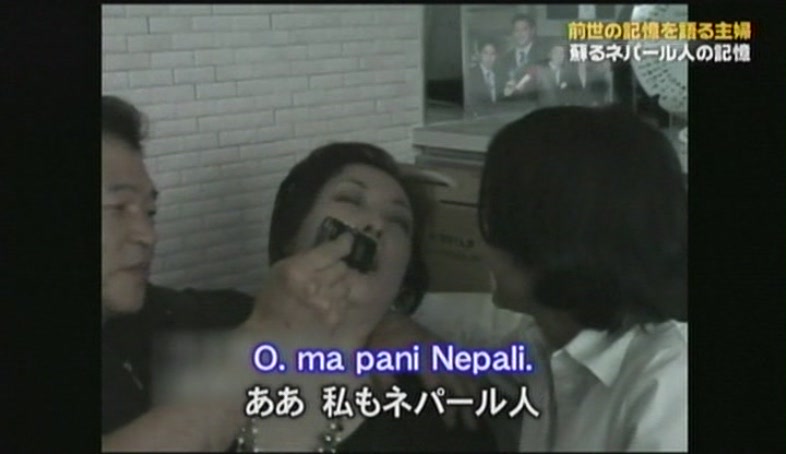
CL: Tapai Nepali huncha?
     (Are you Nepalese?)
KA:Ho, ma Nepali.
(Yes, I am Nepalese.)
CL:O, ma Nepali.
(O, I am Nepalese too.)


KA:Tapai kaha basnuhuncha? Tapai kaha basnuhuncha? Tapai ghar kaha ho?
(Where do you live? Where do you live? Where is your house?)
CL:Ah. Bujina.
(Ah. I don’t know.)


KA:Bujnubhayena?
(Don’t you know it?)

KA:Tapai Gorkhama basnu huncha ki, tapai Kathmanduma basnu huncha ki, kaha basnuhuncha?
(Do you live in Gurkha District or in Kathmandu, where do you live?)
CL: Ah... ah... ah... bujina.
(Ah…ah…ah… I don’t know.)

KL: Bujnubhayena?

(Don’t you know?)

KA: Aru kehi cha tapailai bhannu parne kura?
(Do you have anything else you would like to say?)
CL:
Kodo ... ah ... dado ... ah ... ah..
(Kodo*…ah…dado…ah…ah….)
       *A kind of millet.

KA: Tapai, bihana beluka ke khanu huncha tapaile gharma?
(What do you eat at home?)
CL: Ah .. ah... Shiba ... e ... e ... dharma.
(Ah…ah…Shiba…e…e…religion.)
KA: Dharma?
(Religion?)

KA: Tapai mandir janu huncha?
(Do you go to temple?)
CL:Ho.
(Yes.)

KA:Mandir janu huncha?
(Do you go to temple?)
CL: Ho.
(Yes.)

KA: Kun mandir janu hunccha ta?

(Which temple do you go?)
CL:H...... ho.
(Y…yes.)

KA: Ho? Tapai mandir janu huncha ki hundaina?
     (Yes? Do you go to temple or not?)
CL:Aaaa. Bujina.
    (Aaaa. I don’t know.)

KA: Bujnubhayena?
    (Don’t you know?)

KA:Tapaiko buwa ko nam ke re? Ba ko nam. Ba ko nam.
    (What is the name of your father?)
CL: Ah ... ah ... Tama ... Tamali ... ah...
    (Ah…ah… Tama… Tamli … ah…)


KA: Tamari? Tamari?

    (Tamari? Tamari?)
CL: Ah ....

    (Ah…)

KA: Ama ko nam thaha cha?Ama?

    (Do you know the name of your mother?)
CL:Ama?
    (Mother?)

KA:Ama.
    (Mother.)
CL: Ah ... Bhayena. Ma nallu gaun ek.

(Ah… I don’t know. I am of Nallu Villege.)


<To be continued>